Key Takeaways
- A demonstration plant in Morris, Minnesota, has started up for its first season of low-carbon ammonia production.
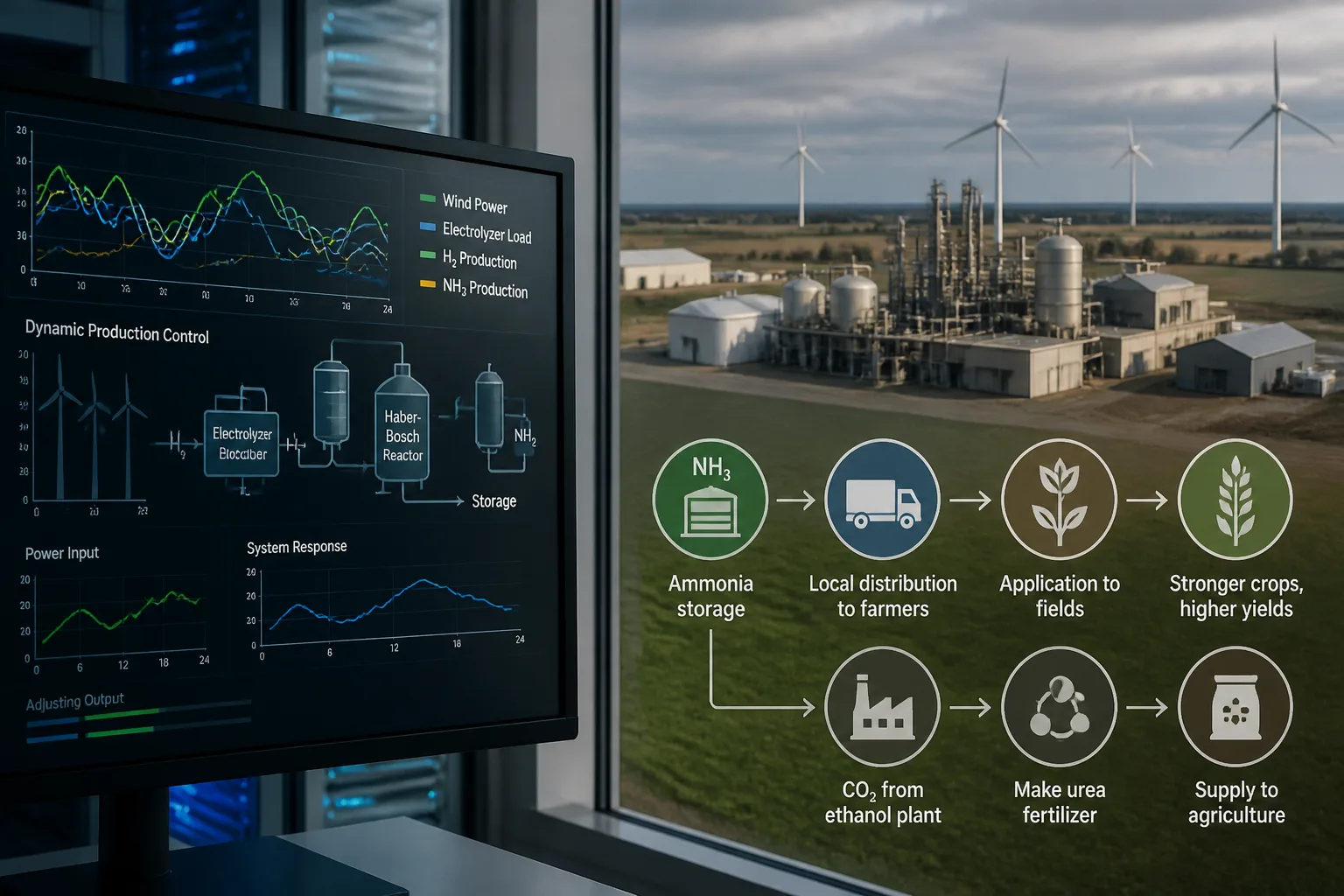
- The system uses wind power to run electrolysers that supply hydrogen to a Haber-Bosch ammonia plant.
- New modelling and control systems are helping the plant adjust output as renewable power changes.
What happened
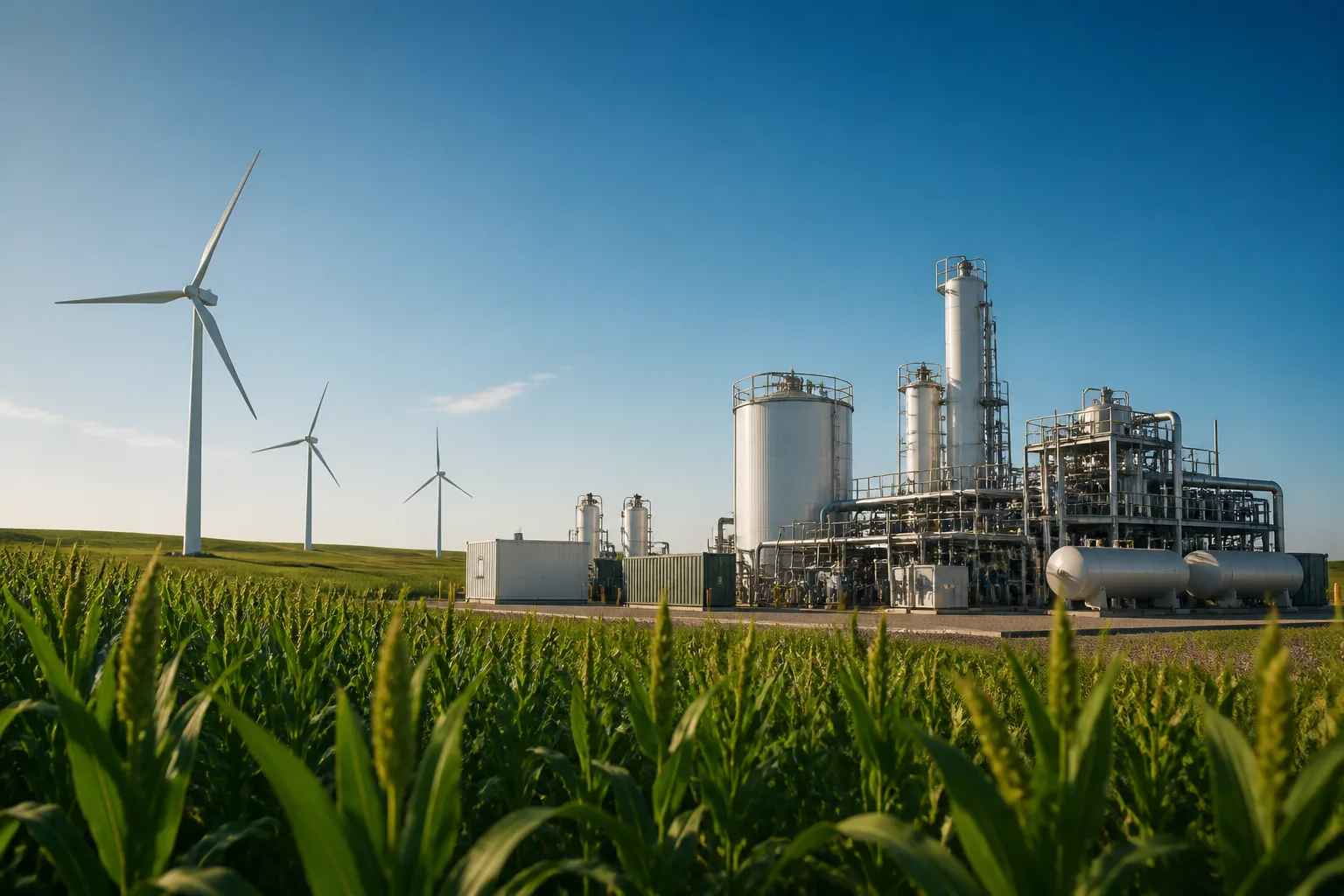
A pioneering ammonia facility has come online at the University of Minnesota’s West Central Research and Outreach Center in Morris, a rural part of the state. The plant is being brought online gradually, with a target of producing one ton per day of low-carbon ammonia for local fertiliser use.
The project links wind energy to electrolysis, producing hydrogen that then feeds a Haber-Bosch process. Unlike conventional chemical plants that are designed to run at a steady rate, this demonstrator has to deal with the variability of renewable power. According to the source, the plant can adjust its ammonia production rate using new modelling and control systems.
The facility is a collaboration among the University of Minnesota, RTI International and Casale. It is described as an upscale of a 2013 pilot plant and as a step toward a larger network of renewable ammonia generation hubs that could be owned by farmer cooperatives.
The source also says the ammonia can be stored in nurse tanks. Another pathway mentioned is combining the ammonia with carbon dioxide by-products from ethanol production to make urea, the most common fertiliser used in Minnesota.
Why it matters
The technology problem this project is trying to solve is not just how to make ammonia with lower emissions, but how to make an industrial chemical process work with intermittent power. The source frames that as a plant-design challenge: if wind or solar is the feedstock, the system needs either large and costly hydrogen storage or a more flexible operating model.
That is where the modelling and control layer becomes important. Instead of forcing the plant to behave like a traditional steady-state chemical facility, the demonstrator appears to be designed to follow the available renewable power. In practical terms, that could reduce the need for oversized storage and make the overall system more economical.
The project is also positioned as a response to local market pressures. The source cites high fertiliser prices and supply-chain instability, and argues that local production could create revenue streams within the state. If farmers can access a moderately priced nitrogen fertiliser that is consistent year after year, they may be able to plan budgets and crop marketing with more certainty.
There is also a broader systems angle here. The source suggests a model in which farmer cooperatives could own and develop renewable ammonia hubs, with support from state loans, credits and other financing. That makes the project interesting not only as a clean-energy demonstration, but also as an example of how industrial technology, agricultural demand and local ownership might be combined.
What to watch
The most immediate question is whether the Morris facility can reliably reach and sustain its target output while dealing with renewable-power swings. The source makes clear that the plant is being turned on gradually, which suggests this is still an early operational phase.
It will also be important to see how well the control systems perform in practice. The project’s value depends in part on whether flexible operation can materially reduce the cost and complexity of storing hydrogen or electricity. If it works, that could strengthen the case for similar systems elsewhere.
Another key issue is scalability. The source points to a possible future network of commercial renewable ammonia hubs, but that would depend on financing, local demand and the ability to replicate the technical setup. It is also unclear from the source how broadly the urea production pathway will be used beyond the mention of ethanol-derived carbon dioxide.
For now, the Morris plant looks like a significant demonstration of how renewable electricity can be integrated into fertiliser production. The main story is not just that ammonia is being made with wind power, but that the plant’s software and controls are being used to manage the mismatch between intermittent energy and an industrial chemical process.