Key Takeaways
- Google is updating Image Search as part of the service’s 25th anniversary.
- The new experience is expected to show a gallery of images before you search.
- Google says the gallery will be shaped by your interests, including web and search history.
What happened
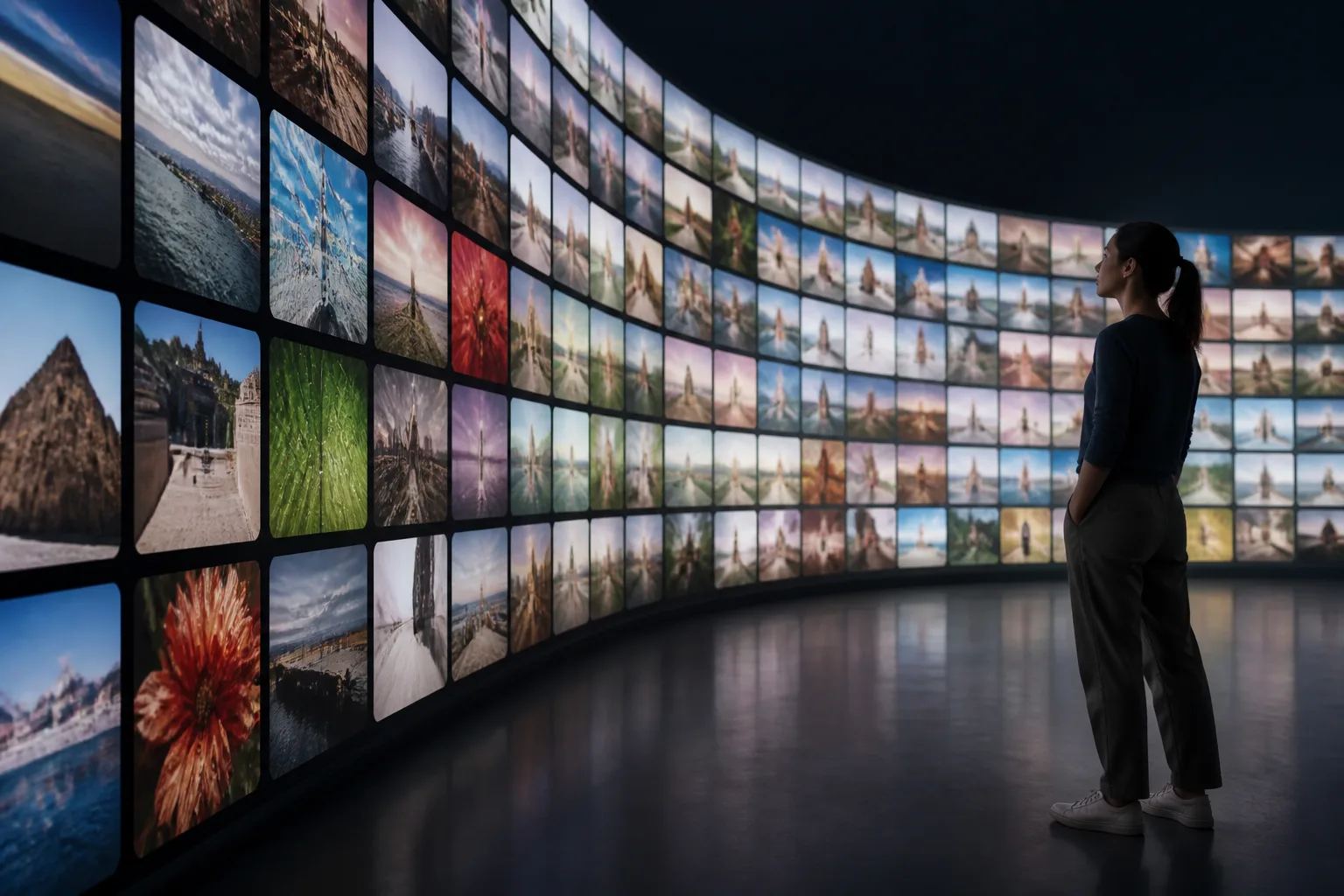
Google is preparing a redesign of Image Search that moves it further away from the simple search bar users see today. According to the company’s explanation, the new version will surface a gallery of images from across the web before a user enters a query.
The gallery is meant to be continuously updated, and Google says it will be informed by a person’s interests. In this context, that means the web and search history associated with a Google account. In other words, what users search for and interact with online will help shape what Google suggests in the Image Search interface.
The change comes as Google marks 25 years since launching Image Search. The company frames the feature as part of a long arc that began when image search first became useful for queries where people wanted to see something rather than read about it. Google has pointed to searches around Jennifer Lopez’s green Versace dress from the 2000 Grammy Awards as an example of the kind of need that helped motivate the feature.
For now, the current Google Images experience remains relatively minimal: a plain search bar for finding pictures. The reported update would replace that stripped-down approach with something that looks more like a personalized discovery feed.
Why it matters
This is more than a visual redesign. It suggests Google wants Image Search to act less like a neutral lookup tool and more like a recommendation surface.
That shift matters because image search plays an important role in how people browse the web visually. Users rely on it to discover products, identify people or objects, and find sources they may not have been looking for directly. When a search interface begins surfacing content before a query is entered, the order and selection of what appears can shape discovery in a more active way.
It also shows how deeply AI-style curation is becoming part of Google’s search products. The source material describes the change as part of Google’s broader approach in 2026, where AI features increasingly show up in the interface itself. Even without details on the underlying model or ranking system, the direction is clear: Google is using personalization to guide what users see earlier in the search process.

That could make the experience feel more relevant for some people. A gallery tailored to someone’s interests might surface images that are more aligned with what they tend to look for. But it also means users may see a less generic view of the web than they do today. The interface is no longer just responding to an explicit search; it is making assumptions based on prior activity.
For a product as widely used as Google Image Search, that design choice could affect how visual information is discovered at scale. Even modest changes in presentation can influence which sites, creators, and topics get attention.
What to watch
The biggest question is how this new Image Search will be rolled out and how visible the personalization will be to users. The source material does not say when the feature will arrive broadly, only that it is coming soon.
It will also be important to see how Google presents the new gallery in practice. Will users be able to distinguish clearly between personalized suggestions and results tied to a search? Will there be controls to limit how much web and search history shapes the experience? The available information does not answer those questions, but they will matter for anyone who uses Image Search as a discovery tool.
Another point to watch is whether this is a one-off celebration tied to the service’s anniversary or the start of a broader trend in search interfaces. If Google brings more AI-driven curation into Image Search, it could foreshadow similar changes in other parts of Search as well.
For now, the update signals a familiar pattern: Google is taking a mature product that once felt straightforward and making it more adaptive, more personalized, and more guided by AI-style recommendations.