Key Takeaways
- The Svalbard Global Seed Vault stores duplicate seed samples from genebanks worldwide, not original collections.
- The vault has been used to restore seeds after the loss of a collection in Aleppo during Syria’s civil war.
- Its role is less about dramatic survival fiction and more about preserving a stable, cold backup for fragile seed banks.
What happened
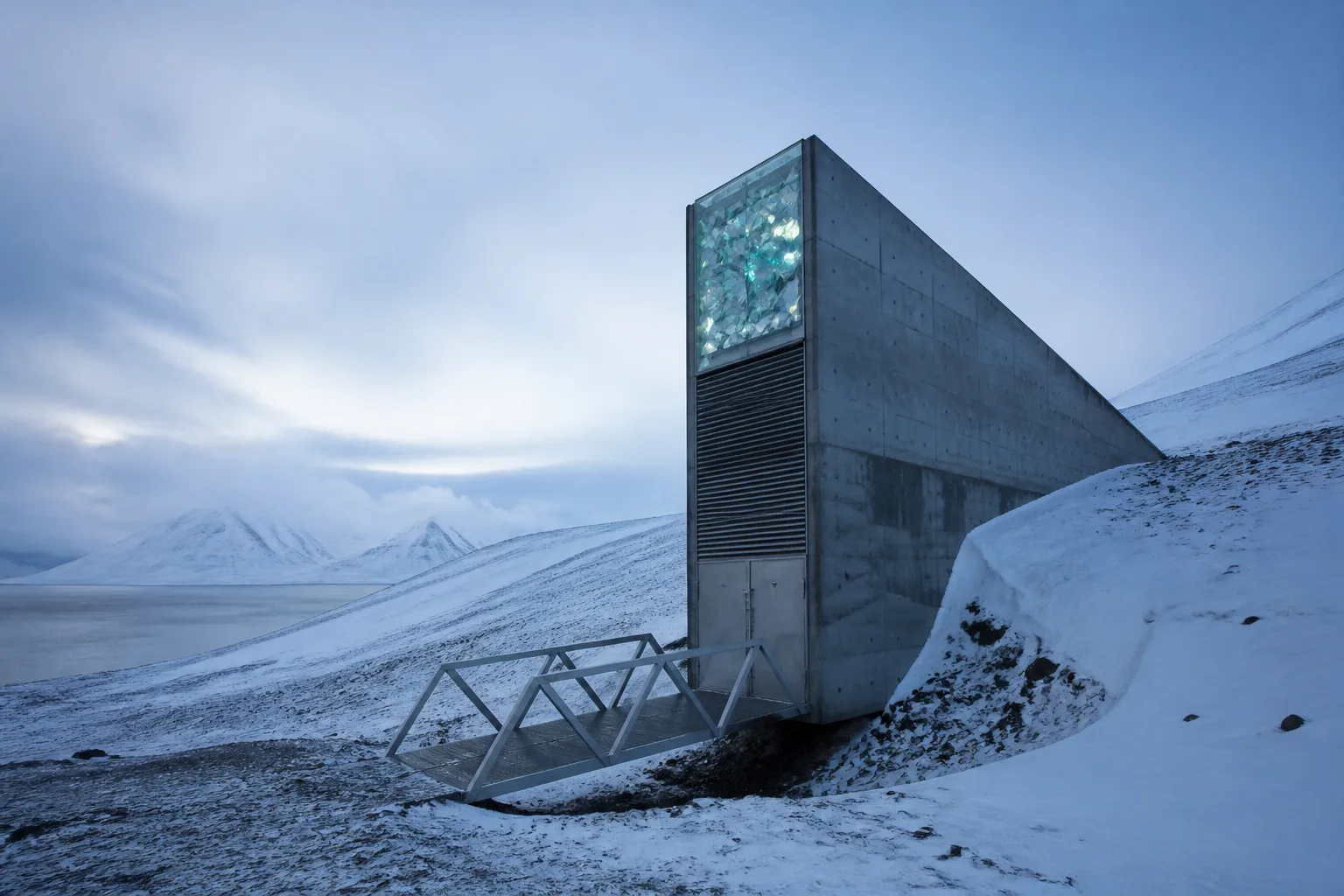
The Svalbard Global Seed Vault sits about 120 metres inside a sandstone mountain on the Norwegian island of Spitsbergen. According to the source material, it holds more than 1.3 million seed samples and is designed to store up to 4.5 million. The facility opened in February 2008 and is run jointly by the Norwegian government, NordGen, and the Crop Trust.
Rather than serving as a symbolic “doomsday vault,” the site functions as a backup for the world’s seed banks. The seeds inside are duplicates, sent there by genebanks that keep active collections elsewhere. If a local collection is lost, the duplicates can be used to rebuild it.
The vault receives deposits regularly, with shipments arriving roughly three times a year. The source says that in 2024, 54 depositors added 64,331 samples. The October 2025 intake included staples such as Filipino rice and Peruvian chilli, along with a large collection of traditional African vegetables from the World Vegetable Center’s genebank in Tanzania.
The vault has also been used in the other direction. ICARDA, the International Center for Agricultural Research in the Dry Areas, had backed up part of its collection there before its genebank near Aleppo became impossible to operate during Syria’s civil war. The source says ICARDA later withdrew seed from Svalbard in stages starting in 2015, and that the recovered material was used to rebuild genebanks in Morocco and Lebanon.
Why it matters
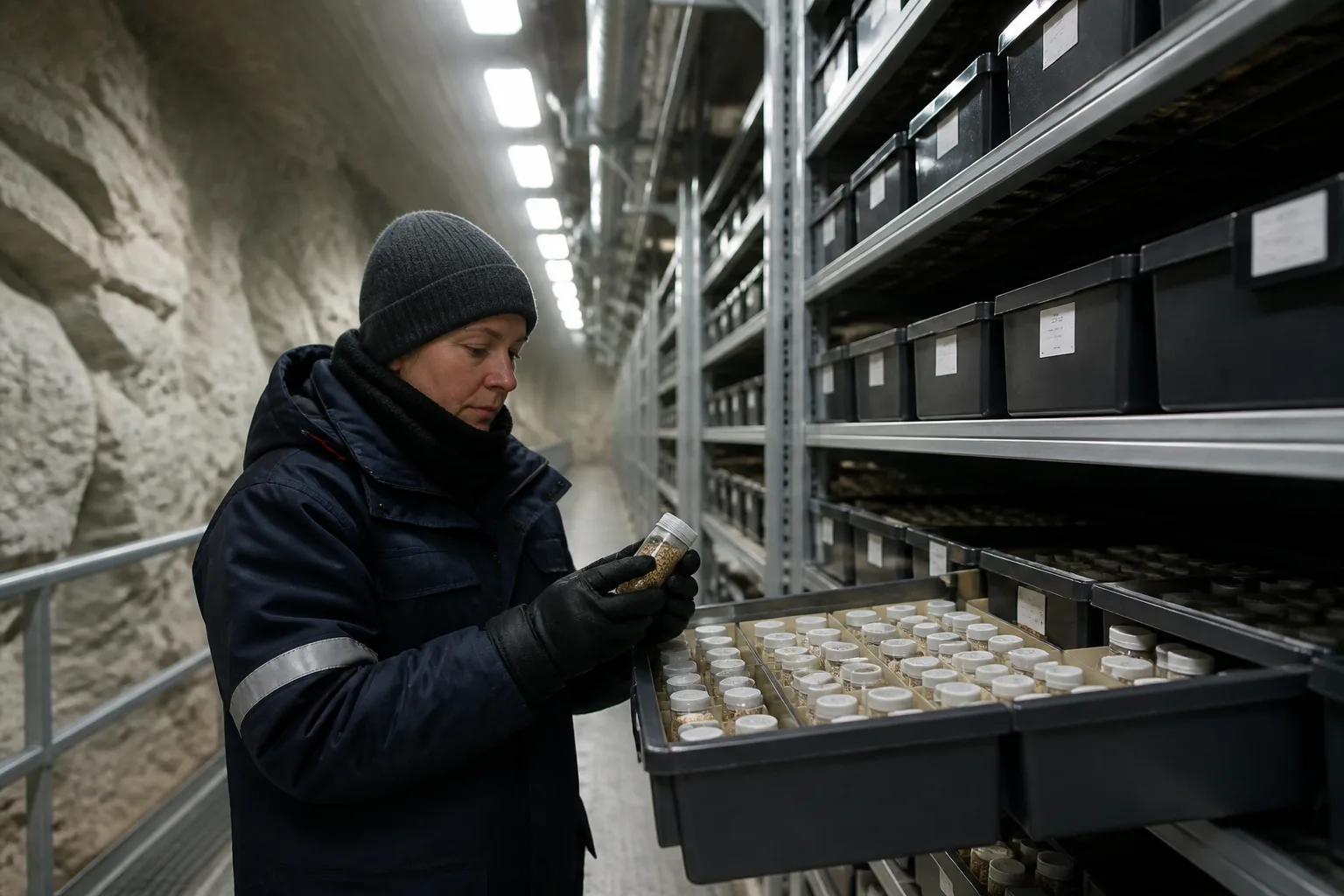
The article frames Svalbard as an answer to a very ordinary but serious technology problem: preservation failure. Genebanks can be damaged by power cuts, floods, fires, funding gaps, and conflict. The Crop Trust notes in the source that even a malfunctioning freezer can ruin an entire collection.
That makes the vault valuable not because it is isolated, but because it is dependable. Its location was chosen for cold, remoteness, and geological stability, with the expectation that rock and permafrost would help keep the seeds frozen even without power. The vault also relies on mechanical cooling.
The source highlights a 2016–2017 incident in which meltwater entered the access tunnel during an unusually warm winter and refroze there. The seeds were not threatened, but Norway treated the event as a maintenance issue and improved waterproofing, drainage, and pumping at the entrance.
What the vault backs up is also important. The source points to collections from Sudan, the Philippines, and Palestinian contributors among recent deposits, showing how war and climate stress can affect seed banks directly. Svalbard does not fix those risks, but it gives the world a cold duplicate if a local collection fails.
What to watch
The most important indicators are practical rather than dramatic. The vault’s capacity, the pace of new deposits, and whether the tunnel and cooling upgrades continue to hold through warmer Svalbard winters will shape its long-term usefulness.
The other question is whether the broader network of genebanks stays funded and functional. The source is clear that Svalbard is a backup, not a substitute for healthy seed banks on the ground.
If more collections face disruption, the Arctic vault may be called on again. But its real success may be measured by how rarely that happens.