Key Takeaways
- Researchers are using AlphaFold in a new way: to help identify parts of gene-editing proteins that contribute to off-target effects.
- The work focuses on making gene-editing systems more precise by redesigning protein components rather than relying only on guide RNA design.
- The source frames the result as early-stage research aimed at improving safety, not as a finished clinical solution.
What happened
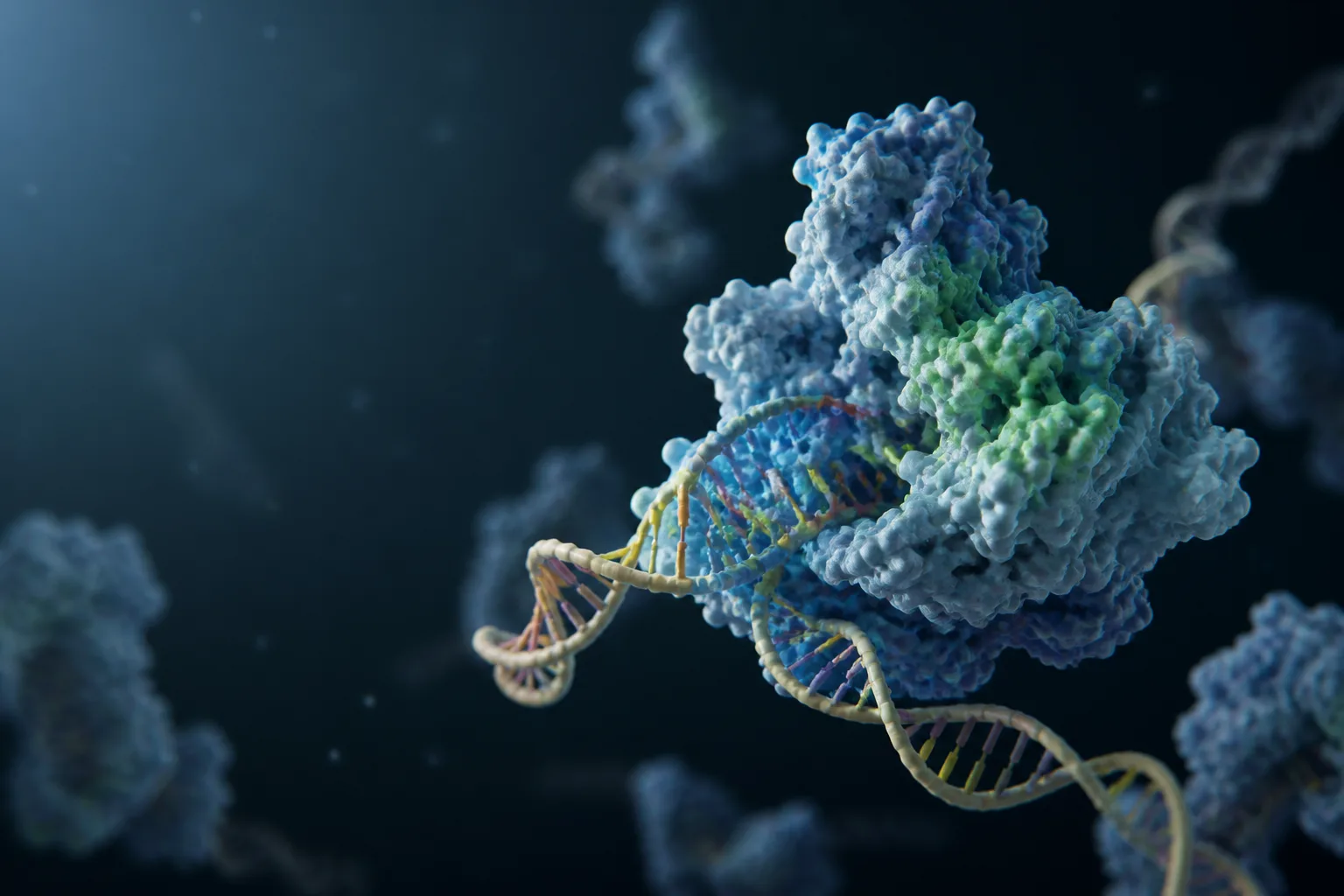
A recent report from Ars Technica describes researchers adapting AlphaFold, Google’s protein-folding AI, for a different kind of biotechnology problem. Instead of using the tool only to predict how proteins fold, the team used it to help locate key areas in gene-editing proteins that are associated with off-target effects.
Off-target edits are a basic safety concern in gene editing. Even when a system is designed to target a specific sequence, the human genome is large enough that similar sequences can appear elsewhere by chance. That means gene-editing tools can sometimes make changes in the wrong place, especially when many cells are edited.
The report says the researchers used AlphaFold to support redesign work aimed at reducing those errors. In other words, the AI was part of a broader effort to make the proteins in gene-editing systems behave more selectively.
The story places this work in the context of the three major parts of gene-editing systems. One is the guide RNA, which helps steer the system to the intended DNA sequence. Another is the Cas protein, which works with the guide RNA and helps determine whether the system binds where it should. The third is the target DNA itself. The article notes that guide RNA selection is already used to improve specificity, and that improved Cas proteins have also been developed to reduce off-target edits.

Why it matters
This is a useful example of AI doing work that is not about chatbots, search, or consumer apps. AlphaFold is being used as a scientific design tool, helping researchers reason about protein features that affect safety in gene editing.
That matters because the biggest barriers in biotechnology are often not headline-grabbing breakthroughs, but incremental improvements that make complex systems more dependable. In gene editing, fewer off-target effects can mean more confidence in the underlying technology, especially as therapies move from the lab toward practical use.
The source also makes clear that this is part of a larger, ongoing effort. Scientists have already been trying to reduce off-target edits through better guide RNA design and improved Cas proteins. The AlphaFold-based work fits into that same safety push by adding another computational method to the toolkit.
What to watch
The key question is how broadly this approach can be applied. The source describes a specific research effort, but it does not suggest that AlphaFold alone solves gene-editing safety. The practical value will depend on whether these redesigned proteins consistently reduce off-target effects in real experiments.
It will also be important to watch whether this kind of AI-assisted protein redesign becomes a standard part of gene-editing development. If it does, that would strengthen the case for AI as an enabling technology in life sciences, not just in software products.
For now, the main takeaway is more modest but still significant: AI is helping researchers refine the molecular machinery behind gene editing, with the goal of making those systems safer and more precise.