Key Takeaways
- In Catalonia, rescued donkeys are being used to graze dry vegetation that can fuel fast-moving wildfires.
- The Tivissa Donkeys Firefighters initiative combines animal rescue with forest management and says it helps create natural firebreaks.
- Researchers and officials cited in the source say grazing can reduce fire risk, but it works best alongside other wildfire prevention tools.
What happened
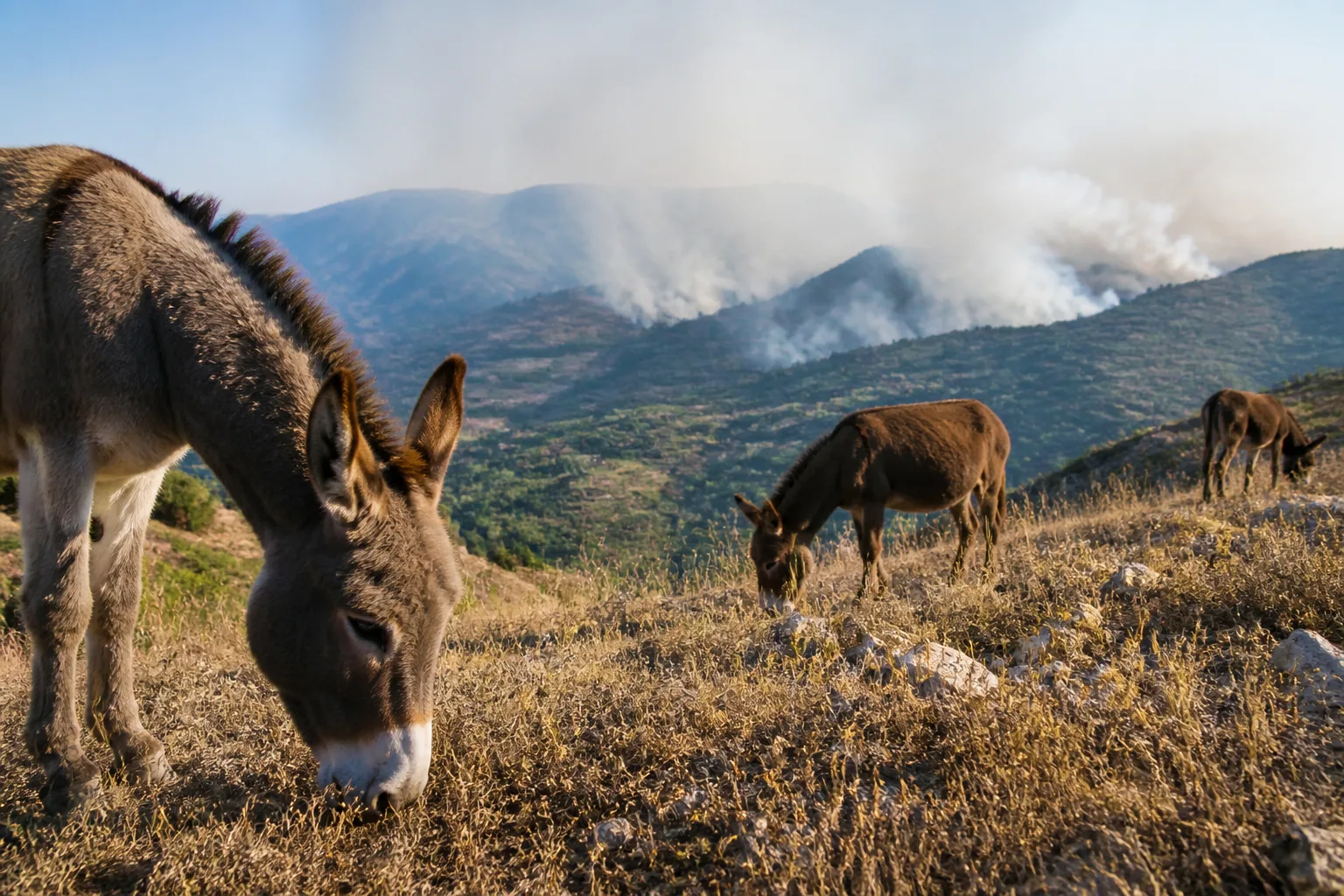
A small region in Spain is using rescued donkeys as part of wildfire prevention. Instead of relying only on machines to clear brush, the animals graze through forests and scrubland, eating dry grass, shrubs and other flammable vegetation that can help fires spread quickly.
The effort is led by Tivissa Donkeys Firefighters, a Catalan nonprofit that rescues abandoned and neglected donkeys and gives them a role in clearing fire-prone land. The source says the organization provides veterinary care and allows the animals to roam freely in forested areas, where they help remove fuel before it becomes a hazard.
The project was founded in 2020 by Joan Cedó Sans, who was inspired after a wildfire burned land he owned in 2013. He noticed that donkeys quickly stripped vegetation from the area and later expanded the idea into a larger conservation effort. The group now cares for more than 60 rescued donkeys, with around half described as part of its informal “fire brigade.”
The article highlights a few of those animals by name, including Roberto, a former racing donkey described as calm, Nelson, described as protective and dominant, and Eleanor, who is still settling in but is expected to become an effective worker.
The source also says the approach has drawn attention outside Spain, including in Canada, where wildfire risk is also severe. Canada has used grazing animals in some regions to reduce risk, though modern firefighting there still depends heavily on satellite monitoring, drones, aircraft and predictive fire modeling.
Why it matters
The broader significance is that this is a low-tech land management strategy being used as part of a modern wildfire response toolkit. By reducing the amount of dry vegetation available to burn, grazing can slow the spread of fire and make it easier for emergency crews to respond.
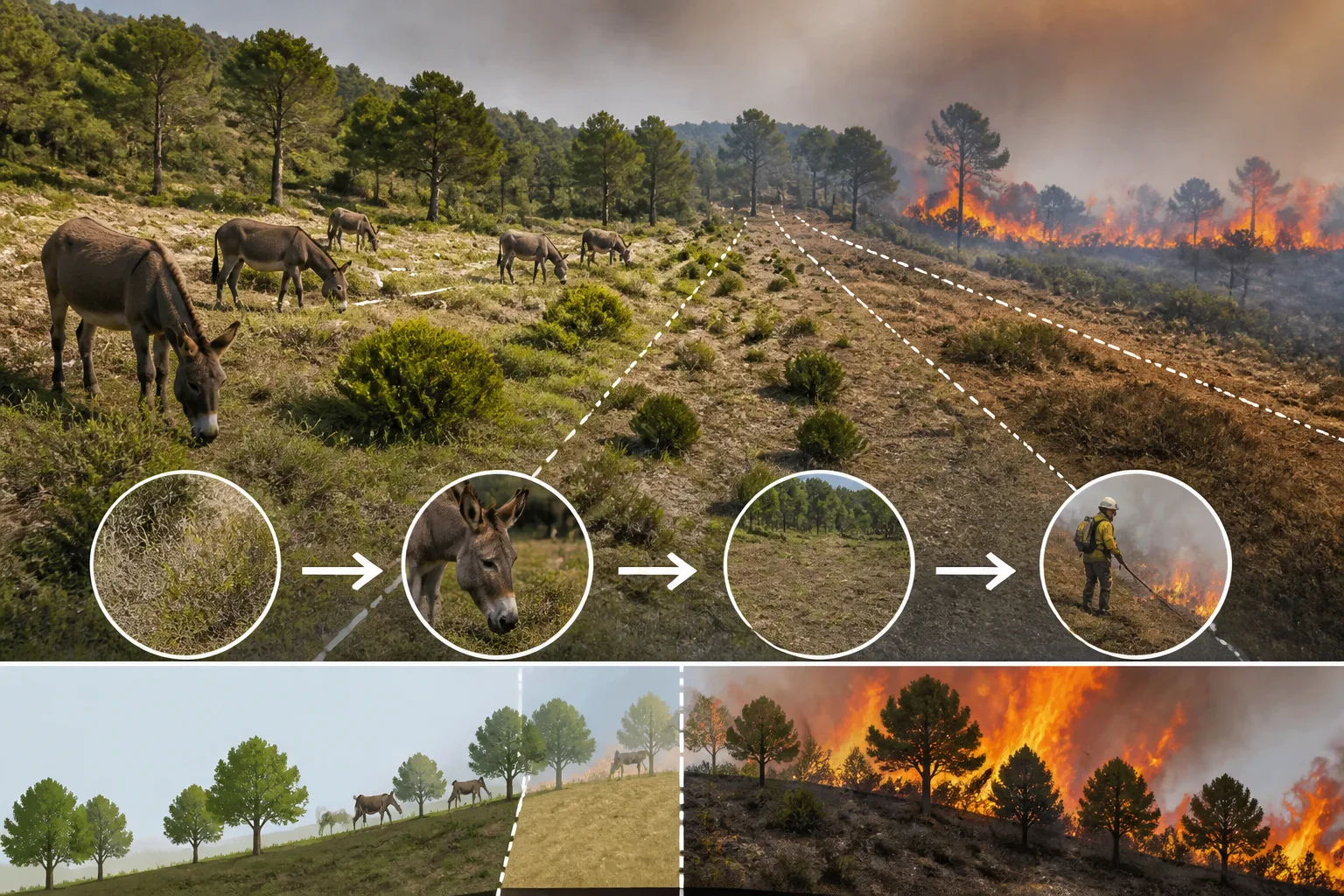
The source cites National Geographic reporting that donkey grazing is effective because donkeys can continuously graze on tough, dry shrubs, weeds and woody vegetation that many other animals avoid. It also notes a study in Scientific Reports that says management of vegetation and grazing can reduce fuel loads and potential wildfire risk.
That said, the article is clear that grazing is not a stand-alone solution. Forestry engineer Jose Vicente Oliver told Reuters that it should be combined with mechanical thinning, pruning and controlled burns conducted by trained professionals.
The practical appeal is twofold: the donkeys help manage fire risk, and the project also rescues animals that were abandoned or mistreated. In that sense, the initiative links environmental conservation with animal welfare rather than treating them as separate goals.
What to watch
The key question is how widely this model can be applied. The source suggests grazing can meaningfully reduce risk, but it does not claim that it can replace established firefighting methods or work equally well in every landscape.
It will also be worth watching how Spanish regions and Canadian officials assess the balance between animal-based grazing programs and more conventional measures such as thinning, pruning and controlled burns. The article presents grazing as a complementary tactic, not a substitute.
Another point to watch is whether more communities adopt similar initiatives as wildfire seasons worsen. Spain has already seen heavy fire damage this year, and Canada is also facing a severe season, which may increase interest in any method that can reduce fuel on the ground.
For now, the source suggests the main lesson is simple: sometimes wildfire prevention can include a herd of rescued donkeys doing work that machines would otherwise have to do.