Key Takeaways
- Chimpanzees show meaningful communication abilities, but not human speech.
- The main barrier is vocal anatomy, not a lack of intelligence.
- Researchers have found more success with sign language and symbol-based systems than with speech training.
What happened
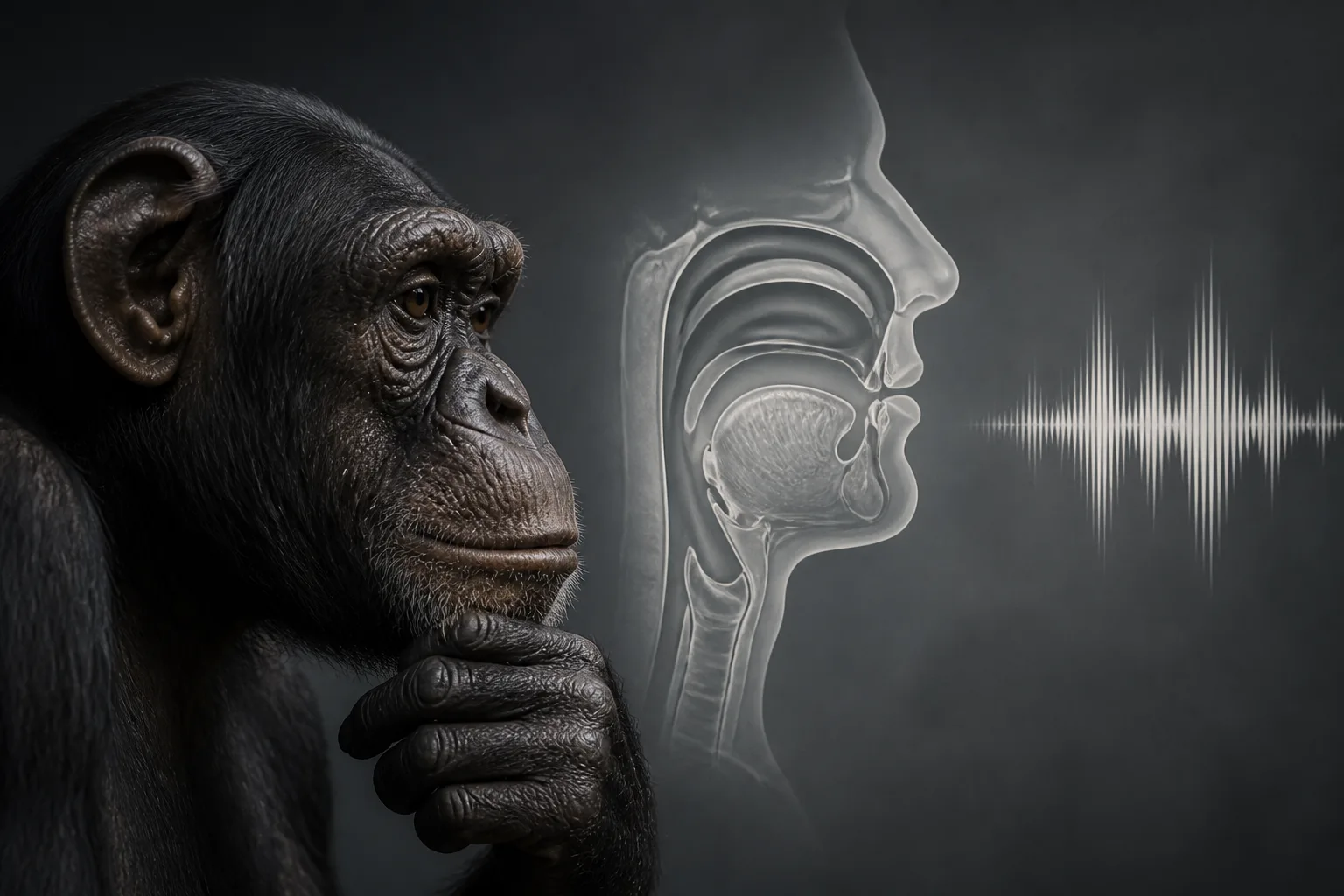
The source article asks whether chimpanzees could talk if they really wanted to, and argues that the limiting factor is physical, not cognitive. It says chimpanzees have brain areas analogous to human language centers, but their vocal anatomy does not support the sounds needed for human speech.
The article points to early attempts to teach chimpanzees to speak, including the Gua experiment, where a chimpanzee was raised alongside a human child in hopes that exposure to human language would lead to speech. According to the source, those efforts were largely unsuccessful.
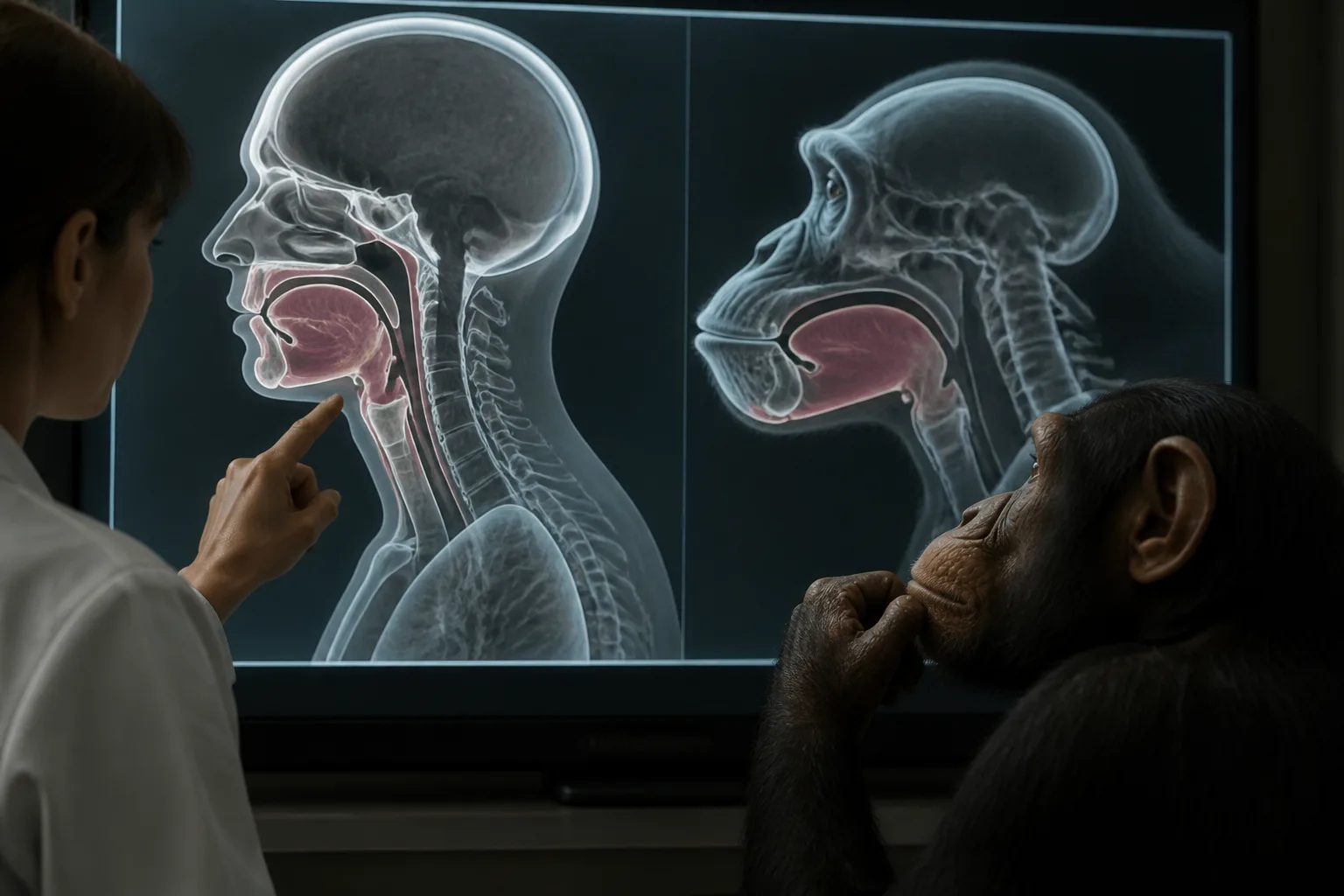
The explanation centers on three anatomy differences. First, a human larynx sits lower in the throat, which helps create a larger pharyngeal cavity and a wider range of vowel sounds. Second, the human tongue is described as more flexible and better suited to precise articulation. Third, while chimpanzees have brain regions comparable to language centers, the connections between those areas and the vocal tract are less developed.
Because of those constraints, the article says chimpanzees cannot physically produce the complex phonemes that make up human speech. In that sense, the source answers the question with a firm no.
Rather than continuing to focus on spoken language, researchers moved toward other communication methods. The article highlights sign language work with Washoe and lexigram-based communication with Kanzi. These approaches allowed chimpanzees to learn symbols, combine them into new sequences, refer to objects and events that were not present, and engage in basic conversation.
The source also notes that the extent of chimpanzee language understanding remains debated. Some researchers argue their symbol use depends mainly on association and reinforcement, while others say chimpanzees may grasp more than previously assumed, including differences in sentence structure and the intent behind speech.
Why it matters
Although this is not a software or hardware story in the usual sense, the source uses communication as a window into cognition, language evolution, and the limits of biological systems. The underlying point is that capability is not always blocked by intelligence alone. In chimpanzees, the barrier is the interface between brain and body.
That distinction matters for how researchers think about animal communication. If a species can learn symbols but not speech, the question shifts from whether it can "talk" to how it can express meaning through other channels. The article suggests that sign systems, lexigrams, and other augmented communication tools may be better suited to chimpanzees than attempts to force human-style vocal speech.
The source also connects chimpanzee communication research to broader questions about human language. By comparing primates, researchers can learn more about how language may have evolved and what neural and cognitive systems support it. The article says this work may also inform understanding of language disorders and communication difficulties in humans.
What to watch
The source says ongoing research includes comparative vocal anatomy studies, neuroimaging work, wild chimpanzee field studies, and development of augmented communication systems. Those areas suggest the field is moving toward a more precise understanding of how chimpanzees communicate and why their abilities differ from ours.
Ethics will remain part of the discussion. The article notes that researchers must weigh the value of these studies against animal welfare concerns and treat chimpanzees with respect.
The broader takeaway is that chimpanzees appear capable of rich communication, but not human speech. Future work may clarify how much of their symbol use reflects learning, how much reflects understanding, and how far nonvocal communication can be extended with new tools.