Key Takeaways
- Coyotes use a varied vocal range, including howls, yips, barks, growls, and whimpers.
- Their calls can sound amplified at night and in open or reflective spaces, making them hard to localize.
- Fear often comes from uncertainty: people may not know how many coyotes are present or where the sound is coming from.
What happened
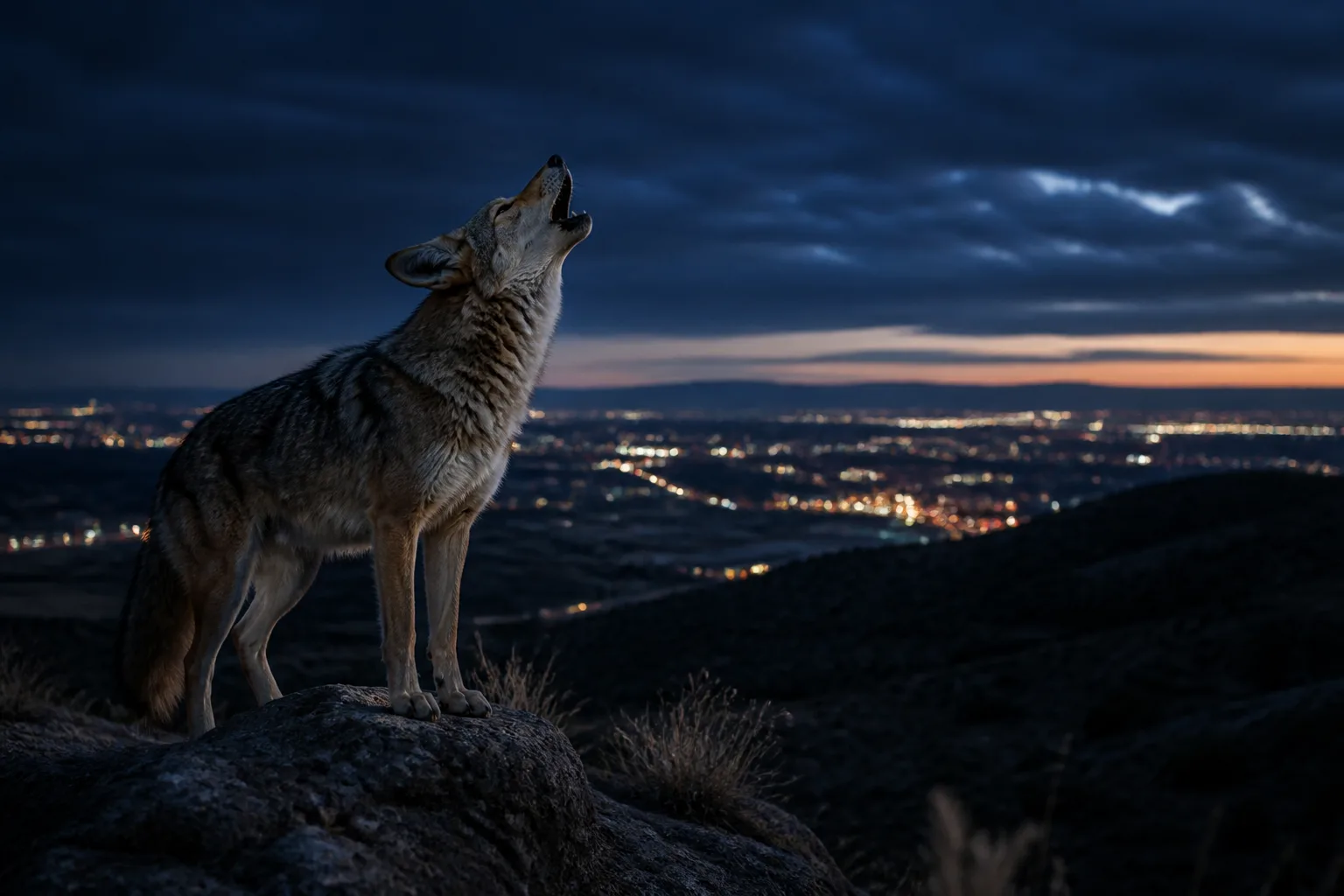
Coyotes are described as a common part of the North American landscape, including areas close to people. Even so, their vocalizations often trigger unease. The source explains that the classic coyote sound mix — especially howls and yips — can seem unnerving because it is dramatic, difficult to place, and often associated with wilderness and nighttime.
The article breaks coyote communication into several sound types. Howls are used for long-distance communication and for locating pack members or marking territory. Yips and yelps are shorter-range sounds tied to play or excitement. Barks can act as warnings. Growls can signal aggression or dominance, while whimpers can express distress or submission.
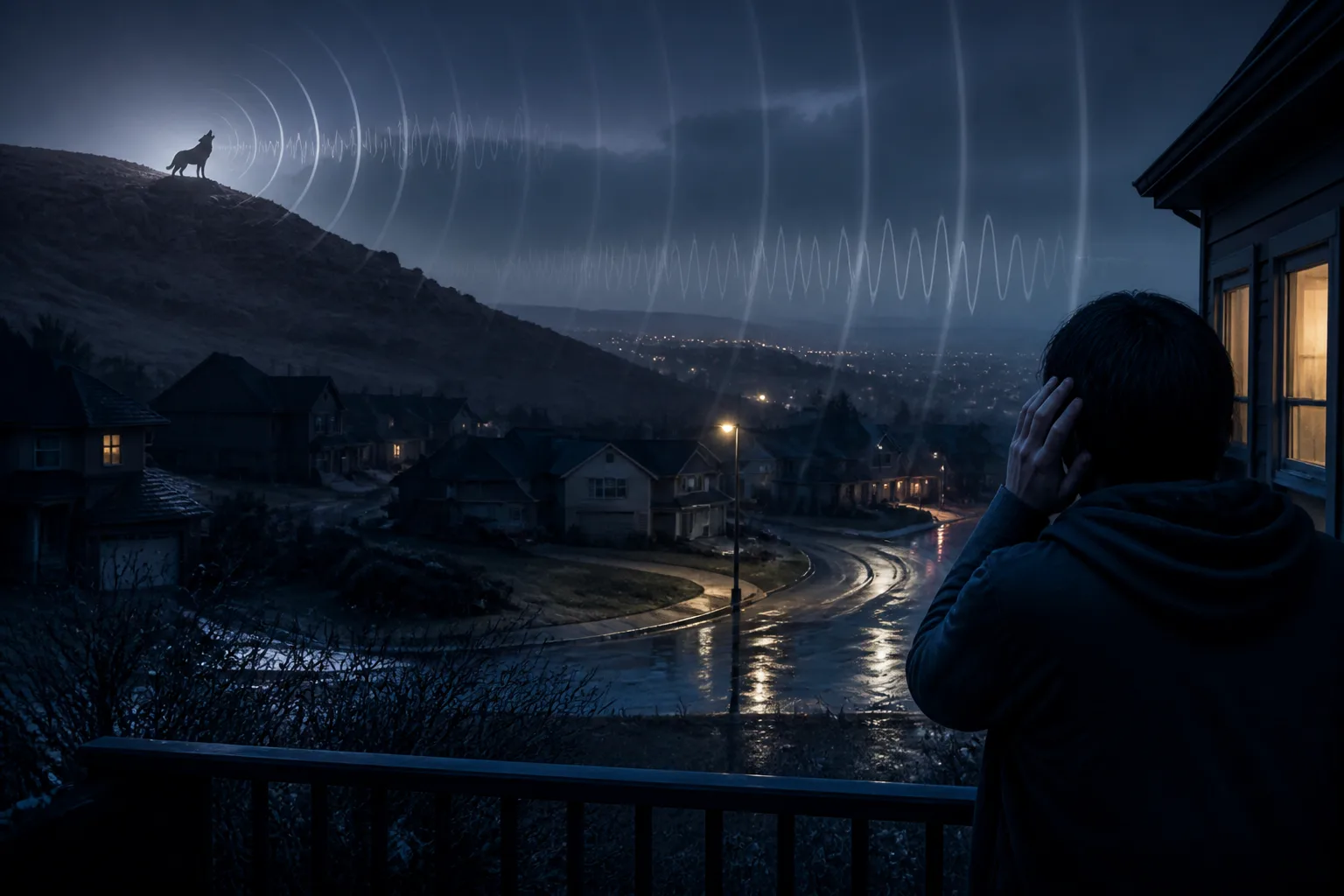
That range matters because listeners do not just hear a single animal call. They hear a layered chorus that can feel larger than the actual group. The source says reverberation and echo can make coyotes seem more numerous, especially in open spaces or canyons where sound distorts and carries.
The article also points to environmental conditions that change how the calls are perceived. At night, sound can travel farther and more clearly, particularly in cool, dry air. In urban settings, hard surfaces such as buildings and pavement can reflect sound and make it hard to identify where the noise began.
Why it matters
The main reason coyotes sound scary is not that the sounds are mysterious in a supernatural sense, but that human listeners are prone to reading uncertainty as threat. The source says our brains react strongly to unfamiliar or unpredictable noises, especially when we cannot judge distance, direction, or the number of animals involved.
That uncertainty is amplified by the emotional associations many people already bring to coyotes. They are linked in popular imagination with darkness, wilderness, and danger. The article also notes that people sometimes anthropomorphize animal sounds, assigning human-like motives or emotions to them, which can heighten the sense of alarm.
Understanding the mechanics of the sound matters because it can reduce misinterpretation. The source emphasizes that coyotes are generally shy and avoid human contact. It also says attacks on humans are rare. Coyotes mainly prey on small mammals like rodents and rabbits.
For people living near coyotes, this distinction is important. A sound that feels threatening is not the same as a threat. The article suggests that knowledge of coyote behavior, together with an understanding of how sound behaves in the environment, can help people interpret the experience more calmly.
The practical takeaway is also simple: fear often grows in gaps between what is heard and what is known. When a coyote call seems to come from everywhere at once, it can be easy to overestimate the danger. The source argues that education and perspective can help communities coexist more comfortably with these animals.
What to watch
The source highlights a few scenarios that make coyote calls feel especially intense. Nighttime is one of them, because coyotes are most active during twilight and night hours, and because sound tends to carry farther in those conditions. Open terrain and canyons are another, since they can stretch and distort the calls. Urban areas can be just as confusing when reflective surfaces bounce sound around.
For people trying to reduce conflict, the article points to basic preventive steps: secure food sources, do not feed coyotes, and keep pets indoors at night when possible. It also notes that smaller pets should be supervised outdoors and kept on a leash.
If an encounter does happen, the source advises against running. Instead, it says to make yourself appear larger, yell, and use thrown objects if needed to discourage approach. Aggressive behavior should be reported to local animal control or a wildlife agency.
In the broader sense, what to watch is not a new technology or a new study, but a familiar sound being heard differently as humans and coyotes share more of the same spaces. The article’s core message is that the eerie effect comes from acoustics, behavior, and perception working together — not from a hidden mystery in the call itself.