Key Takeaways
- AI data center growth is increasing pressure on electrical grids and the transmission lines that feed them.
- In some states, power companies can seek eminent domain when landowners refuse to sell land for those lines.
- Whether those seizures qualify as "public use" may determine how far this infrastructure buildout can go.
What happened
The U.S. is in the middle of a data center expansion tied to the AI boom. According to a Pew Research Center analysis cited in the source, there are more than 3,000 data centers in the country and another 1,500 in development. These facilities house the servers that run large language models and other compute-heavy systems, and they consume significant amounts of electricity and water.
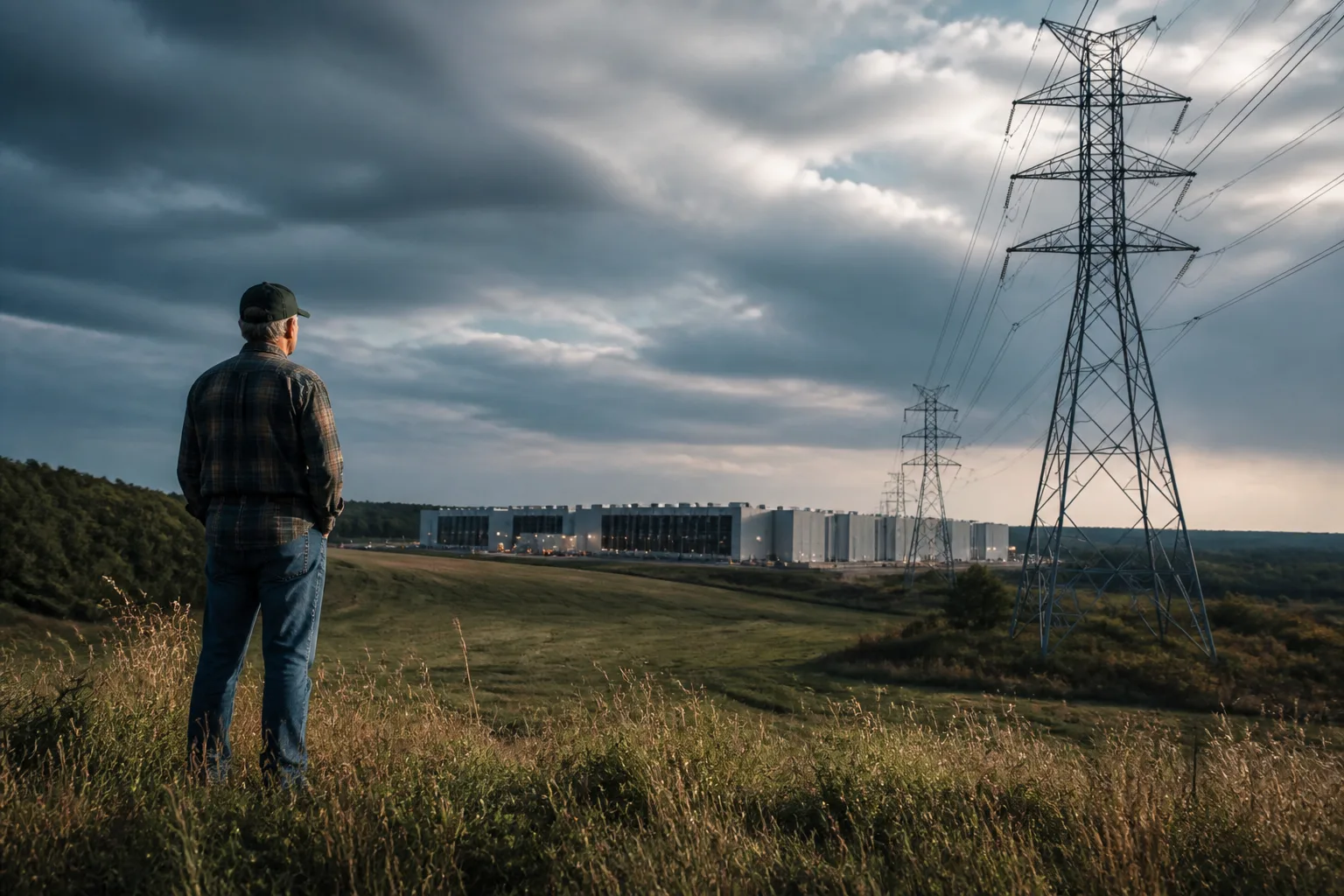
That growth is not only drawing scrutiny toward the data centers themselves. It is also intensifying opposition to the infrastructure needed to power them, especially transmission lines that must cross private land. When landowners refuse to sell easements voluntarily, power companies in some places are turning to eminent domain, the government’s power to take private property without consent so long as the seizure is for public use and the owner receives just compensation.
The source says this issue is already emerging in states such as Georgia and Pennsylvania, where power companies have looked to eminent domain to help secure land for transmission projects. The underlying problem is simple: data centers place major new demands on the grid, and utilities need new lines to carry that electricity reliably.
The article notes that data centers accounted for more than 4% of U.S. electricity use in 2024. As more facilities are built, demand is expected to rise further. That makes transmission capacity a central bottleneck in the physical infrastructure behind AI.
The legal question is whether a line built to serve a data center can count as a public use. The source frames that as the core dispute. Power companies can approach landowners to buy easements, but if a landowner refuses, condemnation may follow. Whether that is allowed depends on a mix of federal constitutional law, state law, and how each state defines the powers of utilities or other common carriers.
The article points out that the U.S. Supreme Court has interpreted public use broadly in cases such as Kelo v. City of New London, where economic development qualified. But the public reaction to Kelo also triggered reforms: 45 states enacted eminent domain reform laws after that decision. Some state supreme courts, including those in Michigan, Ohio, and Oklahoma, have interpreted their own constitutions more strictly and blocked takings that simply transfer land from one private party to another for economic development.
That means landowners may have stronger arguments under state law than in federal court. Even so, courts often allow eminent domain for utilities such as power companies, especially when the project can be tied to grid reliability or service to in-state customers.
Why it matters
This is a technology story about the hidden infrastructure behind AI. The public conversation often focuses on models, chips, and software, but the source shows that transmission lines, land access, and grid reliability may matter just as much for whether data centers can keep expanding.
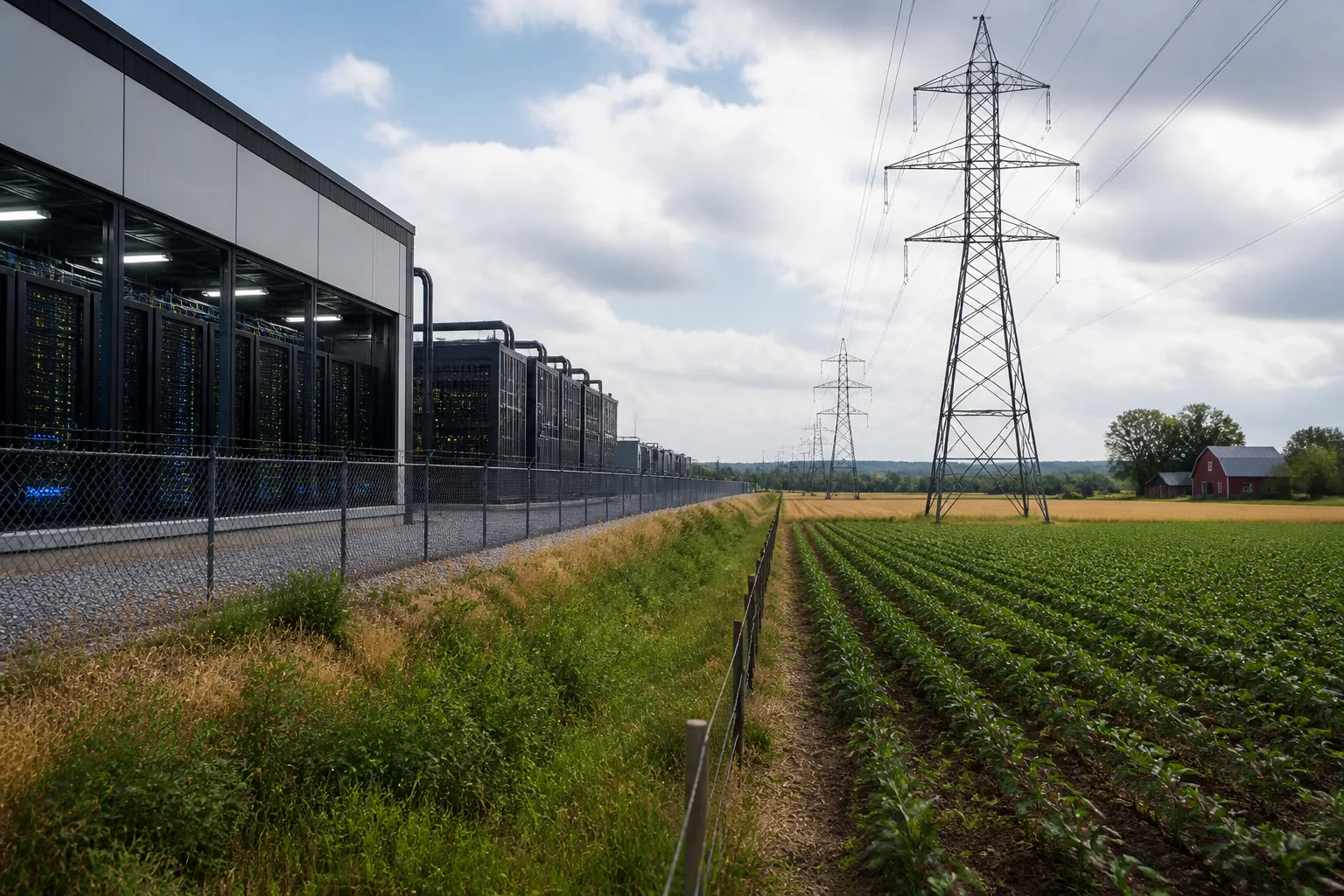
The issue also illustrates how AI demand can shift costs and conflicts into the physical world. Communities already worry that data centers may raise utility bills, increase pollution, create noise, and reduce green space. The source says polling shows 7 in 10 Americans oppose construction of AI data centers in their communities. While the article does not present a direct legal conclusion about those concerns, it makes clear that the backlash is not limited to the buildings themselves; it extends to the electrical infrastructure they require.
For utilities and policymakers, the key challenge is that power demand from data centers can stress local grids and threaten reliability. In that context, transmission expansion may look like routine infrastructure planning. But if the line primarily serves a private data center, critics may argue that the public-use justification is too weak. That tension is what makes the eminent domain debate so consequential.
The source also suggests that the outcome may vary by state. Some courts have upheld takings where the line improved reliability or provided at least some in-state benefit. Others have rejected condemnations when the proposed line would not serve local customers. The practical result is that data center growth may face very different legal and political hurdles depending on geography.
What to watch
The most important question is how courts will treat transmission projects built around AI infrastructure. If judges view grid reliability and in-state service as enough to satisfy public use, utilities may have a relatively clear path to build the lines needed for new data centers.
But if landowners can show that a project mainly benefits a private data center or crosses state lines without serving local customers, condemnation efforts could become harder to defend. The source says that kind of argument has mattered before, including in a Mississippi case where the court rejected a power company’s taking because the line would have run into Louisiana without benefiting Mississippi customers.
Another thing to watch is whether state-level eminent domain reform continues to shape these disputes. The source notes that many states changed their laws after Kelo, and some state courts remain more restrictive than federal law. That could make data center expansion uneven, with some regions more permissive than others.
For the technology industry, the bigger takeaway is that AI buildout is no longer just a question of chips and model training. It now depends on land rights, power planning, and the legal meaning of public use. If those pieces do not line up, the next constraint on AI infrastructure may be the route of a transmission line, not the availability of a server rack.