Key Takeaways
- The source argues that natural events have repeatedly shown a simple mechanism: when iron-starved ocean water gets nutrients, phytoplankton growth rises quickly.
- It cites many examples — dust, volcanic ash, undersea vents, wildfire smoke, icebergs, and whale-mediated nutrient cycling — as evidence that the response is observable, repeatable, and reversible.
- The piece’s broader claim is that these natural analogs make intentional phytoplankton-based carbon removal look more understandable and controllable than critics assume.
What happened
The source makes the case that ocean fertilization is not an untested idea. Instead, it says decades of natural events have already functioned as large-scale experiments in what happens when mineral nutrients reach nutrient-poor waters.
According to the piece, the open ocean often behaves like a desert for phytoplankton because sunlight is plentiful but key nutrients are limited, especially iron. When iron arrives, phytoplankton multiply and take up more carbon dioxide. When the nutrient input stops, the bloom fades within weeks.
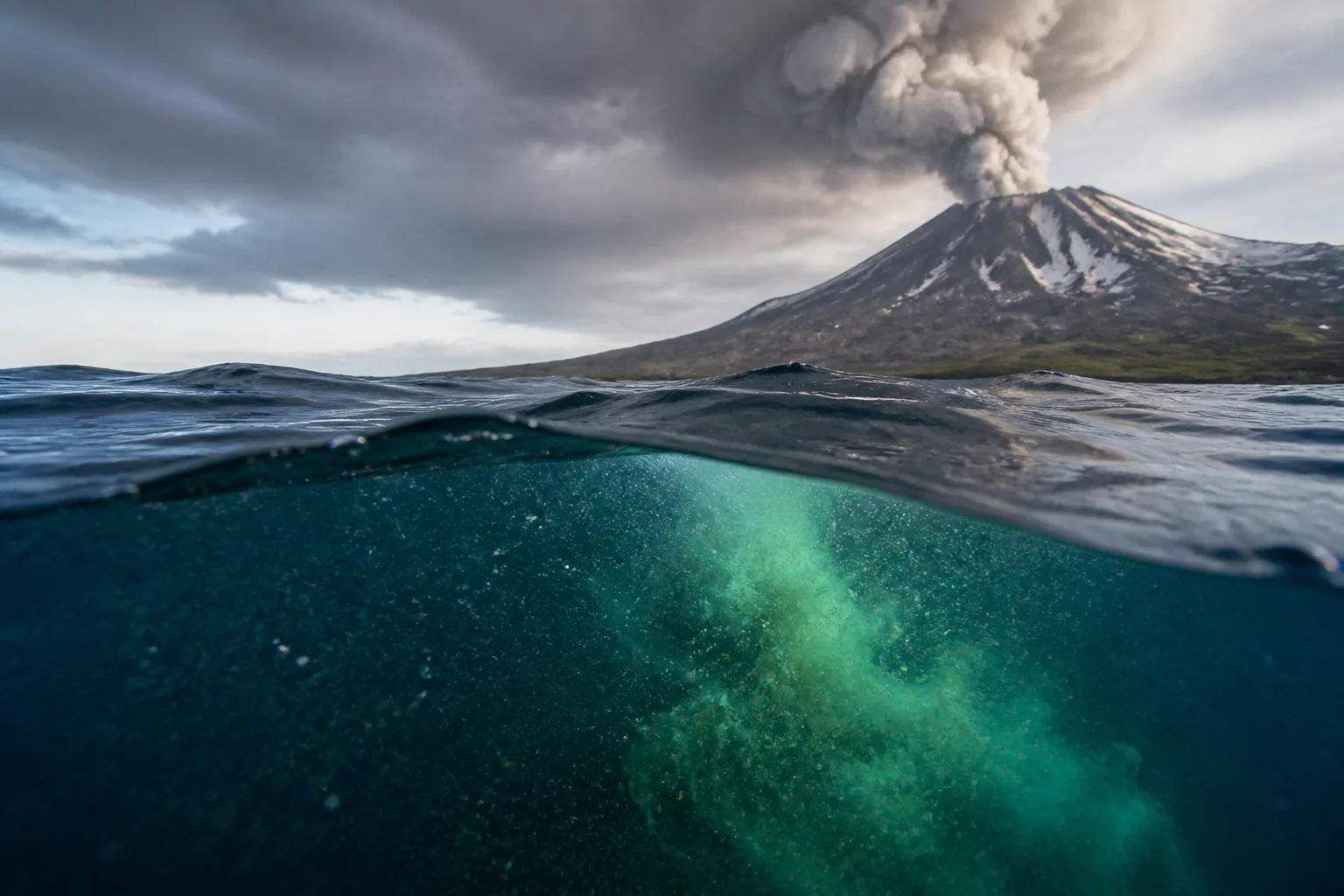
To support that claim, the article walks through multiple natural nutrient sources. It points to undersea vents near Tonga, where iron-rich fluid appears to feed a bloom of nitrogen-fixing bacteria over an area the size of Germany. It also cites dust storms carrying iron from deserts such as the Sahara and Gobi, volcanic ash from eruptions in Alaska, Iceland, Hawaii, Japan, and the Mariana Islands, wildfire smoke from Australia and Siberia, and even island and iceberg systems that steadily leak iron into the surrounding sea.
The article’s central point is that these events are not isolated curiosities. It says satellites, ocean robots, shipboard measurements, and lab experiments have all shown the same basic pattern in different places and over long time periods: nutrient-starved water responds quickly and visibly to iron addition.
Why it matters
The technology angle here is carbon removal through deliberate nutrient addition, even though the piece is framed more as a scientific argument than a product story. The source suggests that if nature can repeatedly trigger phytoplankton blooms by supplying iron, then human-designed interventions may be less mysterious than they first appear.
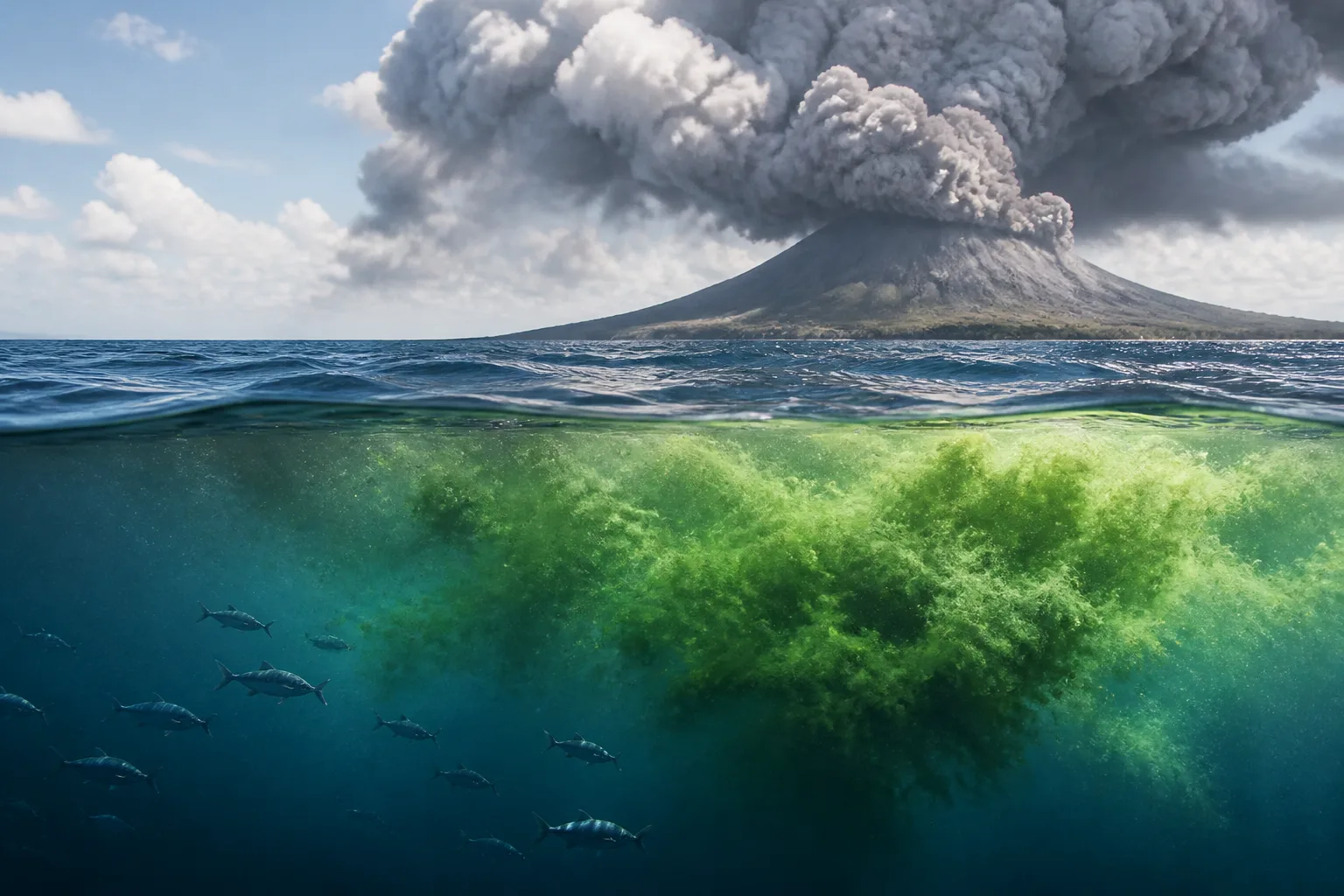
That matters because the debate around ocean fertilization often turns on uncertainty: Would it work? Would the effects be temporary? Could it damage ecosystems? The source says natural experiments answer at least part of that. In its reading, the response is reversible — feed the system and growth continues, stop feeding it and the bloom recedes — and the accumulated evidence does not show clear ecological harm across the examples it discusses.
The piece also makes a broader climate argument. It implies that if intentional nutrient addition can be done with monitoring and planning, it may be a more controlled approach than the random, unmanaged nutrient pulses nature already delivers. The article treats that as an argument for taking the idea seriously rather than dismissing it as speculative.
What to watch
A reader looking for the technology implications should watch for three things:
- Whether future studies continue to connect specific nutrient inputs with measurable carbon transfer into the deep ocean, not just short-lived surface blooms.
- Whether researchers can separate productive fertilization from unwanted ecological side effects in different regions and seasons.
- Whether the evidence base begins to shift from natural analogs toward managed field tests with tighter monitoring and clearer carbon accounting.
The source is strong on observational examples, but it does not present a full engineering or commercialization roadmap. It is best read as a scientific case for feasibility, not as proof that a deployable carbon-removal industry is already established.
Still, the repeated pattern described in the article is the key takeaway: in nutrient-poor waters, adding the missing ingredient repeatedly appears to boost phytoplankton growth and carbon drawdown, and nature has already done that experiment many times over.