Key Takeaways
- Temporary fencing gives worksite supervisors a visible way to define where access begins and where risk should stop.
- The source says fencing helps manage movement, separate hazards, protect equipment, and reduce public exposure.
- Its main value is flexibility: panels, gates, and supports can move as the site changes.
What happened
The source presents temporary fencing as a practical control measure for busy worksites where people, vehicles, materials, and hazards all overlap. In that environment, simple warnings are often not enough. The article argues that a physical perimeter helps create order before confusion becomes a safety problem.
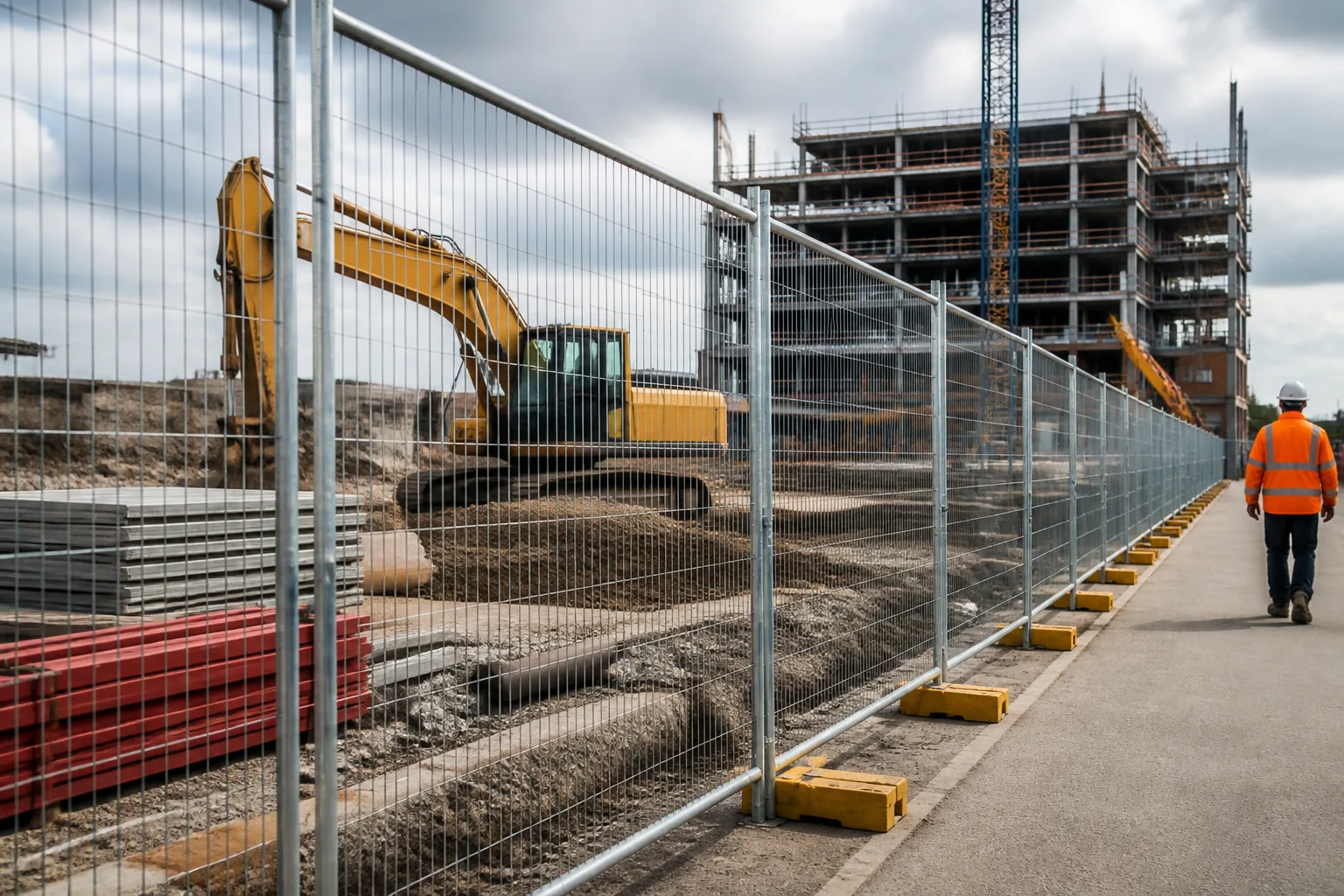
According to the source, temporary fencing can be used to separate excavation zones, storage areas, machinery, and delivery points from pedestrians or nearby traffic. It also helps site teams guide workers, drivers, inspectors, and visitors along approved paths rather than leaving movement to chance. That can make entry control easier at gates and reduce the number of unexpected crossings through active work areas.
The source also emphasizes that some risks require distance rather than reminders. Trenches, demolition areas, live services, lifting zones, and unstable surfaces are all described as areas that need firm separation. Temporary fencing provides that separation while still allowing the layout to be adjusted as work progresses. Signs can be attached at eye level, and panels can be repositioned when a new phase of work changes the hazard profile.
Another theme in the source is asset protection. Materials and equipment often remain on site before installation, and open areas can make it easier for cable, timber, fittings, tools, or small machines to disappear. A fenced perimeter signals that the site is actively controlled and can make casual entry more difficult, especially when combined with locks, bracing, and lighting after hours.
Why it matters
The source argues that temporary fencing matters because worksite safety is not only about the people inside the fence. Many worksites sit close to homes, shops, schools, footpaths, or roads, which means the public can be exposed to construction hazards even if they are not part of the project.
A visible barrier creates a clear stop point before someone reaches dust, debris, uneven ground, or moving machinery. That is especially important for children or visitors who may not recognize a construction zone as dangerous. In the source’s framing, fencing helps limit accidental entry and reduces public exposure to site activity.
The article also links fencing to traffic control. On active sites, trucks, loaders, forklifts, and utility vehicles need space that does not mix with foot traffic. Temporary fencing can define loading bays, turning areas, and pedestrian routes before congestion builds. Gates can be positioned to work with traffic controllers or sign-in stations, making movement easier to manage and reducing confusion around entry points.
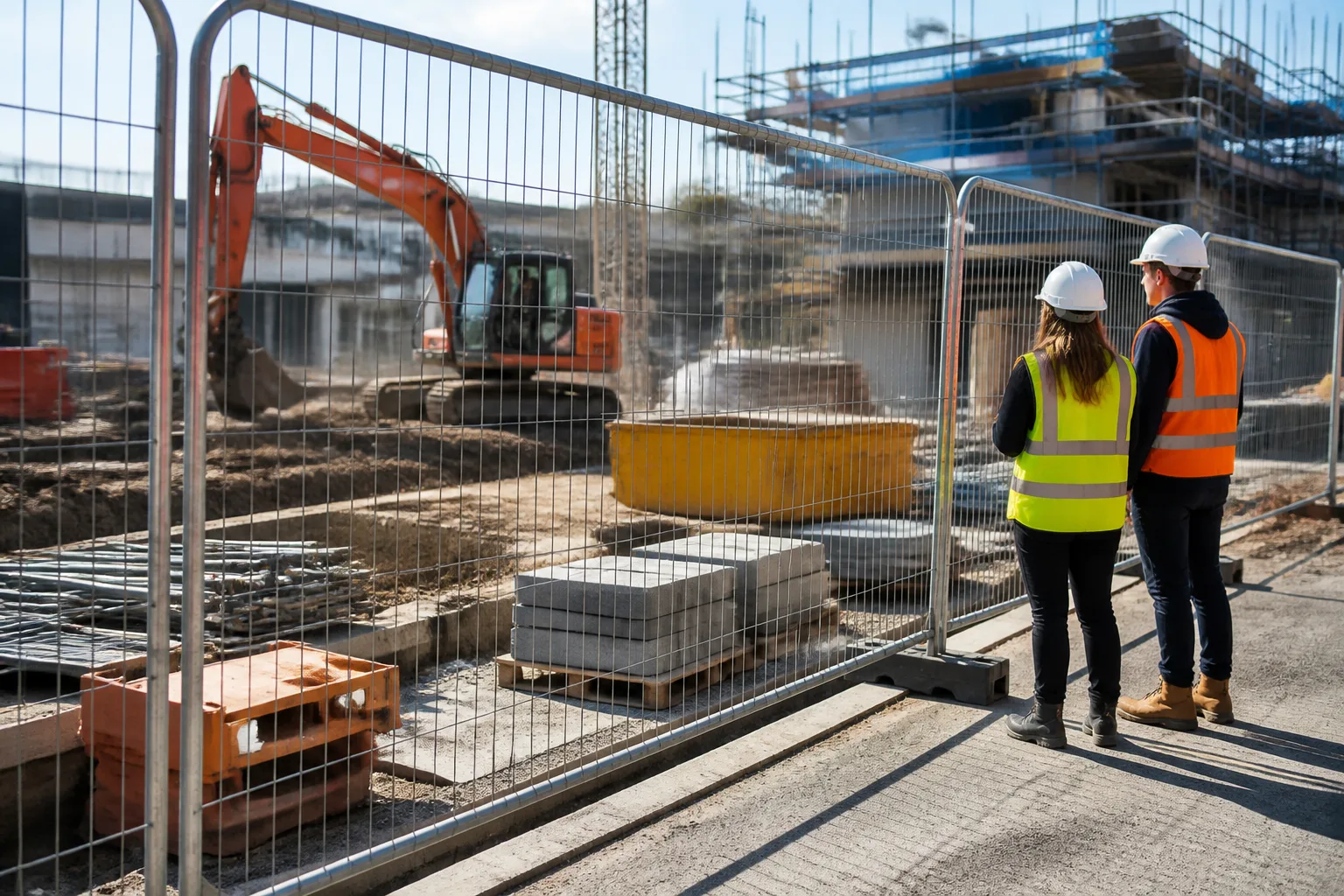
Weather is another reason the source gives for treating fencing as more than a simple barrier. Wind, rain-softened ground, and vibration from deliveries can loosen panels or feet. The article says bracing, clamps, weights, and level placement help keep the fencing stable, while shade cloth can reduce dust drift and add privacy where needed. After storms or heavy traffic, the fence line should be checked before work resumes.
The source also connects temporary fencing to compliance and documentation. Visible controls make it easier to show that access, separation, and public exposure were considered during planning. Photos of gates, signs, braces, and perimeter lines may support inspections or internal reviews. When several contractors share a site, those controls can help make responsibilities easier to explain.
What to watch
The source makes clear that temporary fencing works best when it is treated as a changing control, not a one-time install. That means teams need to watch for shifts in site layout, new hazards, and changes in traffic flow as the job develops. A fence that made sense at the start of a project may need to move as excavation, demolition, or delivery patterns change.
Gate placement is another detail to watch. The article suggests that gates should be located at logical points so crews can control entry and keep movement predictable. If access points are poorly placed, the fence can lose much of its value by creating bottlenecks or encouraging people to cross where they should not.
The source also points to the importance of regular inspection. Because weather and vehicle movement can weaken the perimeter, teams should check stability after storms or periods of heavy use. That includes looking at bracing, clamps, weights, and the overall line of the fence.
Finally, the article suggests that the best results come when fencing is paired with other simple controls: visible signs, controlled access, lighting, and clear routes for workers and vehicles. Temporary fencing is not presented as a complete safety system by itself. Instead, it is one practical layer that helps a busy site stay organized, secure, and easier to manage as conditions change.