Key Takeaways
- OpenAI’s first branded hardware is the Codex Micro, a $230 mini-keyboard made to monitor and interact with multiple Codex agents.
- The device uses color-coded keys to show when threads are idle, thinking, complete, waiting on human input, or encountering an error.
- The product points to a broader shift toward tools built around supervising AI work, not just starting chats.
What happened
OpenAI has rolled out what Ars Technica describes as its first branded hardware: the Codex Micro. Rather than a general-purpose gadget or a consumer speaker, the device is a compact, RGB-lit mini-keyboard built around the needs of Codex users.
The keyboard is priced at $230 and is described as a limited-run collaboration with Work Louder, a company that already sells a similar customizable square keyboard line called Creator Micro. In other words, OpenAI’s debut hardware does not appear to be a wholly new hardware category so much as a specialized version of an existing form factor, tailored to Codex workflows.
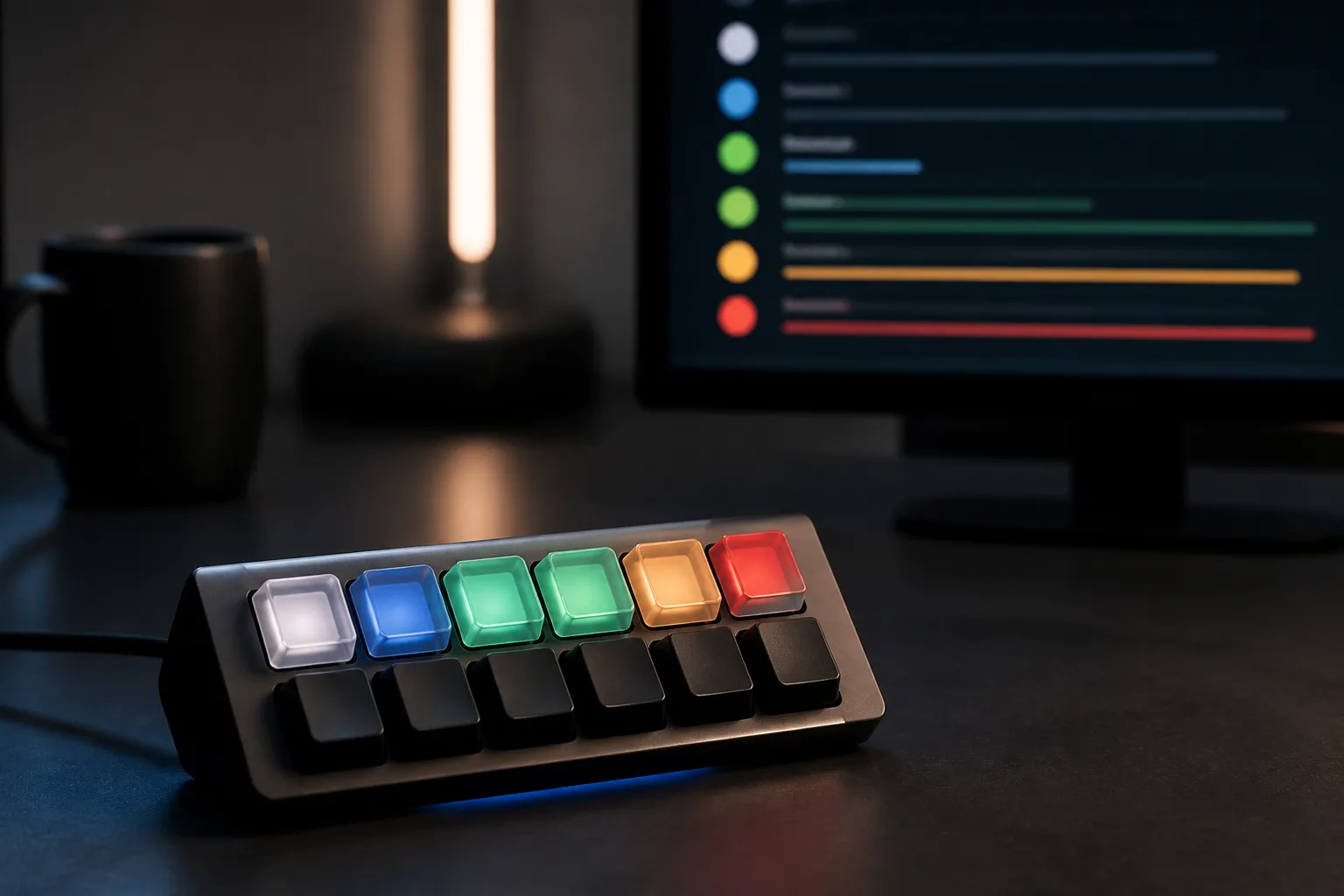
What makes the device notable is its focus on visibility. The top rows include six frosted keys that provide color-coded feedback for up to six Codex threads at once, even when those threads are not currently in focus on a screen. According to the source material, the keys are designed to shift from white when a thread is idle to blue when Codex is thinking and green when a task is complete. They can also flash amber when Codex needs human feedback and red when a thread runs into an error.
A tap on the relevant lit key is meant to bring that Codex window forward on screen. Below those illuminated keys, the device adds six more buttons mapped by default to common Codex actions such as accepting and rejecting changes, branching threads, and a push-to-talk function for audio prompts.
Those controls are not fixed in stone. The buttons can be remapped in software, and the device comes with 32 interchangeable keycaps for physical customization. The first layer of customized functions is reserved for Codex, but users can also program and cycle through five additional sets of general computing shortcuts.
Why it matters
The Codex Micro is interesting less because of its size and more because of what it implies about the next phase of AI tooling. The source material frames it as a device for monitoring multiple agentic threads, which suggests a growing need for interfaces that help humans oversee AI systems that can work in parallel and continue running without constant attention.
That is a meaningful shift from the familiar chatbot model. Chat interfaces are built around conversation: ask a question, get a response, follow up. Agentic workflows are different. They involve multiple threads, background execution, interruptions for human approval, and error states that may need quick attention. A keyboard with color-coded indicators is a physical acknowledgement of that reality.

The device also hints at a new product category: not just AI tools for generating output, but tools for managing AI labor. In that sense, the Codex Micro is a workflow accessory as much as it is hardware. It is optimized for someone who may keep a laptop open and monitor several running AI tasks at once, glancing down to see which thread is idle, which one needs a decision, and which one has failed.
That said, the source is careful to place the device in context. The hardware appears most useful on a desktop, while ChatGPT’s mobile app can offer more detailed monitoring away from the desk. So this is not a universal control surface for all AI use. It is a specialized accessory for a specific kind of heavy Codex workflow.
The collaboration with Work Louder matters too. Because the company already sells a similar keyboard format, OpenAI’s move can be read as a branding and software-layer play rather than a full-scale hardware pivot. Still, even as a collaboration, it signals where the company sees value: making AI agents easier to supervise, interrupt, and steer.
What to watch
One thing to watch is whether the Codex Micro remains a niche, limited-run accessory or becomes the start of a broader family of agent-management hardware. The source material describes it as a limited collaboration, which means its long-term role is not yet clear.
It will also be worth watching how users actually respond to the monitoring model. If agentic tools keep multiplying, interfaces that surface status, errors, and requests for human input at a glance could become more important. If not, the market may treat this keyboard as a clever but narrow experiment.
Another question is how much of the device’s value comes from the hardware itself versus the software layer behind it. The illuminated buttons and customizable keycaps are useful, but the real differentiator may be how smoothly Codex threads are surfaced, controlled, and updated through the integrated workflow.
Finally, OpenAI’s choice of first hardware is telling in its own right. The company reportedly has other hardware ideas in the mix, including rumors of a personalized smart speaker, but its first branded product is not a speaker, headset, or mainstream consumer device. It is a keyboard built to keep pace with AI agents. That says a lot about where the company thinks the near-term friction is: not in talking to AI, but in keeping track of what it is doing.